
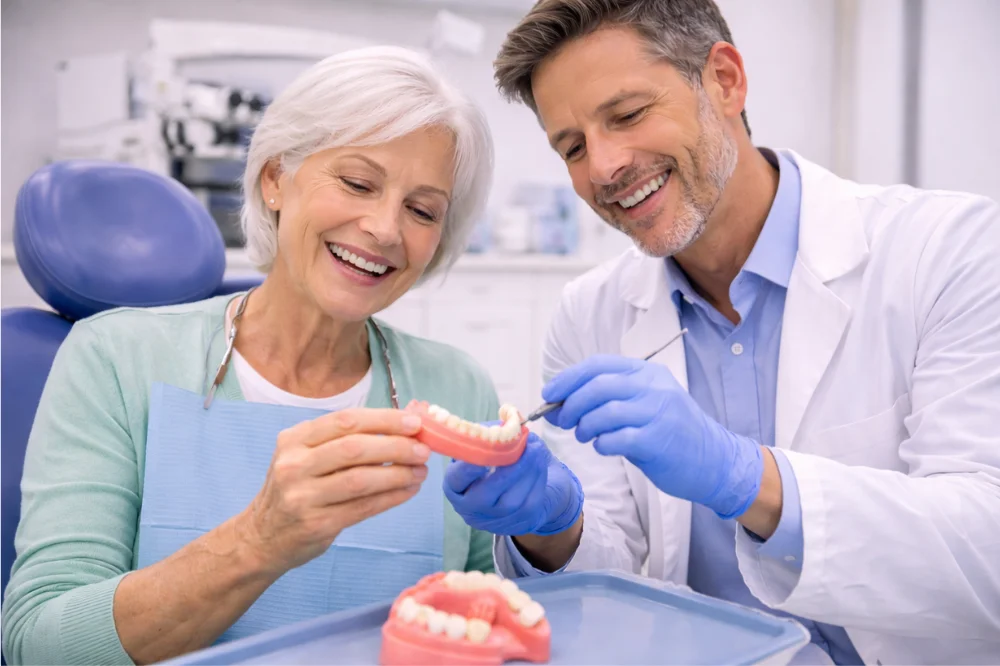
Getting new dentures can feel exciting and a little unsettling at the same time. Many people expect them to feel normal right away, and when they don’t, it can create a lot of unnecessary worry. The truth is that almost everyone goes through a short adjustment period, and understanding what that period looks like makes the experience much easier.
Dr. Jamielynn Hanam Jahr at Beverly Hills Aesthetic Dentistry has helped patients adjust to dentures for more than two decades. As a DDS and long standing member of the ADA, CDA, and AACD, she combines cosmetic planning with practical guidance so patients feel confident during the transition. Many patients from Beverly Grove, West Hollywood, Bel Air, Beverly Crest, and the Golden Triangle ask the same thing when they receive dentures: when will these start to feel normal?
How Long Does It Usually Take to Get Used to Dentures?
Most people do not fall in love with their dentures on the first day, and that is completely normal. Your mouth, tongue, and facial muscles are learning how to work with something new, and that takes time. For many patients the adjustment period lasts several weeks and sometimes a few months.
| Adjustment Phase | What Patients Often Notice | What Helps |
| Days 1 to 7 | Soreness, extra saliva, speech changes, chewing difficulty | Soft foods and patience |
| Weeks 2 to 4 | Speech improves and chewing becomes easier | Follow up adjustments and practice |
| Months 2 to 3 | Dentures feel more natural | Normal eating habits return |
Looking at the process in stages helps patients understand that early discomfort does not mean failure. Improvements usually happen week by week as the mouth adapts and dentists fine tune the fit. Follow up visits also help ensure the dentures become more comfortable as the adjustment period continues.
Common Challenges With New Dentures
If your dentures feel strange at first, you are definitely not alone. Nearly every new denture wearer notices things like sore spots, extra saliva, or difficulty speaking clearly in the beginning. These issues usually fade as the mouth adjusts and small refinements are made.
Soreness happens because the gums are adapting to pressure from the denture base. Speech may sound slightly different because the tongue is learning how to move around the new surface. Chewing also feels different because dentures spread pressure across the gums rather than through tooth roots.
Once patients realize these reactions are normal, the experience becomes much less stressful. Dentures rarely feel perfect immediately, but with practice and a few adjustments they become easier to use every week. Patience during this stage makes a big difference.
Tips to Get Used to Dentures More Comfortably
The fastest way to adapt to dentures is to use them consistently and practice the small skills that help your mouth adjust. Many patients improve quickly when they treat the process like learning something new rather than waiting for it to feel perfect. Simple daily habits help retrain the tongue, cheeks, and facial muscles.
- Start with soft foods such as eggs, yogurt, fish, and soups
- Cut food into smaller pieces and chew slowly on both sides
- Read aloud to practice speech and retrain tongue movement
- Wear dentures as directed during the adjustment period
Consistency matters more than intensity when learning to use dentures. Short daily practice sessions usually work better than occasional long efforts. Over time these habits help dentures feel far more natural and stable.
When to Call Your Dentist About New Dentures
A little discomfort is expected when dentures are new, but patients should never feel like they must tolerate ongoing pain. Dentures often require several adjustments during the first weeks, and those visits are simply part of the process. Small refinements can dramatically improve comfort and stability.
- Sore spots that do not improve after several days
- Dentures that rock or slip when speaking or eating
- Difficulty chewing soft foods after a few weeks
- Jaw pain or a bite that feels uneven
Think of these visits as tuning appointments rather than problems. Dentists expect to adjust dentures while the mouth adapts. Addressing small issues early prevents larger problems later.
Why Some Patients Adapt Faster
Not all dentures are created the same, and that plays a big role in how quickly people adapt. When impressions are precise and bite adjustments are carefully balanced, dentures tend to feel comfortable sooner. Designs that support the lips and facial structure also feel more natural to wear.
Material quality also affects comfort. Premium denture materials feel smoother against the tongue and cheeks and often hold their shape longer. Digital denture technology can improve fit even further by using very accurate scans of the mouth.
Implant supported dentures can shorten the adjustment period because they stay more stable while chewing and speaking. Instead of relying only on suction, they attach to implants placed in the jawbone. Many patients who struggled with traditional dentures find the transition much easier with implant supported options.
Getting Comfortable With Your New Smile
Adapting to dentures is really a process of learning and adjustment rather than a single moment. The first few weeks often involve small challenges like soreness or speech changes, but these usually improve steadily. With patience and a few adjustments most patients regain comfort and confidence.
At Beverly Hills Aesthetic Dentistry Dr. Jamielynn Hanam Jahr helps guide patients through that transition step by step. Patients receive practical tips, follow up adjustments, and reassurance about what is normal during the process. That support helps people return to speaking, eating, and smiling confidently.
Beverly Hills Aesthetic Dentistry
435 N Bedford Dr #414, Beverly Hills, CA 90210
(310) 276-2088
https://mybeverlyhillsdentist.com
Frequently Asked Questions
How long does it take to get used to dentures?
Patients usually ask this because new dentures can feel unfamiliar and even slightly uncomfortable during the first days after placement. What most people are really asking is how the adjustment period normally progresses and when things start to feel easier. In most cases, patients begin adapting within the first few weeks, and by two to three months speech, chewing, and overall comfort feel much more natural as the mouth and facial muscles learn how to work with the dentures.
Why do new dentures feel loose at first?
This question comes up frequently because dentures can move slightly before the tongue and cheek muscles learn how to control them. The better question is whether stability improves over time as the mouth adapts. In most cases it does, because the muscles begin helping hold the dentures in place and dentists can make small adjustments to improve the fit if needed.
Is soreness normal when wearing new dentures?
Many new denture wearers worry that soreness means the dentures were made incorrectly or will never feel comfortable. The more useful question is how long mild irritation typically lasts and when it should be evaluated. Mild soreness during the first weeks is common as the gums adjust to new pressure, but persistent sore spots should be checked by your dentist so the denture can be refined.
Do implant supported dentures feel easier to get used to?
Patients often ask this after struggling with movement or chewing difficulties with traditional dentures. What they are really asking is whether greater stability can make the adjustment period easier. Implant supported dentures attach to implants in the jawbone, which reduces movement during speaking and chewing, and many patients find that this added stability makes adapting to them faster and more comfortable.