Emergency Dental Service Beverly Hills
Same-day emergency dental care in Beverly Hills. Call (310) 276-2088. Monday to Friday, with a nurse-trained dentist of over 25 years.
Sudden, Severe Tooth Pain?
Not satisfied with how your teeth look? We can enhance your smile.
A Broken or Knocked-Out Tooth
Don’t let minor issues become major problems—protect your teeth today.
A Crown or Filling That Came Out
Tired of temporary fixes? Our treatments are built to last.
Call First, Then Follow These Steps
A cracked tooth or an infection that kept you up does not wait for a convenient morning. Call (310) 276-2088 and describe what happened. Dr. Hanam-Jahr keeps same-day slots open for urgent problems, and if she cannot see you today she will tell you on that call rather than leave you waiting.
She has practiced in the Beverly Hills Triangle for over 25 years and trained as a nurse before dentistry, which shapes how she handles someone arriving in pain. Below you will find what counts as an emergency, what to do before you arrive, and when to go to an emergency room instead.
What Counts as a Dental Emergency
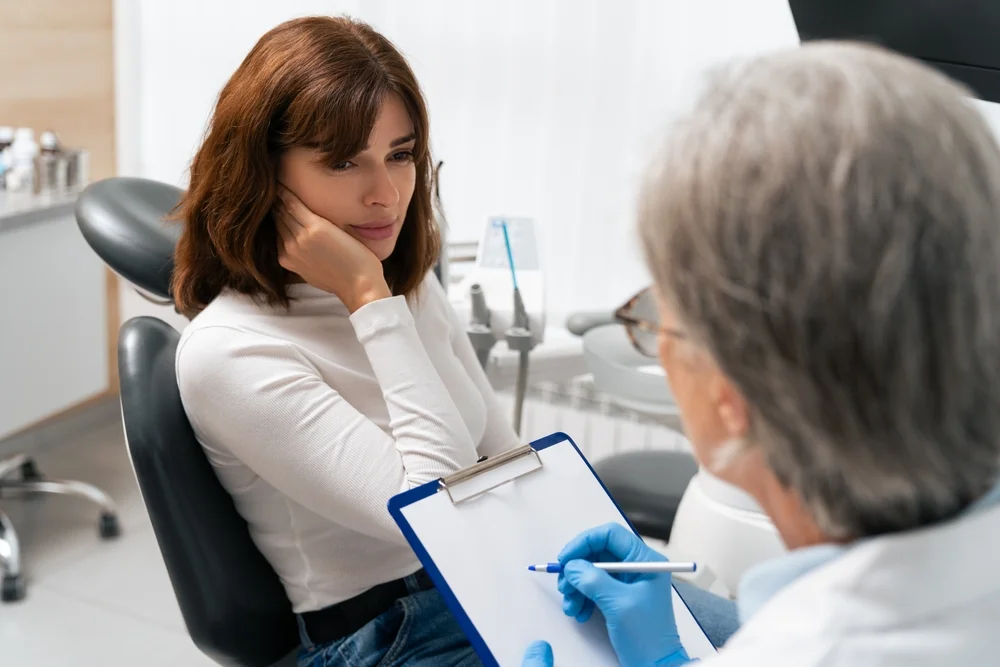
Not every toothache can wait until your next appointment. Some problems need quick attention to prevent infection or lasting damage. At Beverly Hills Aesthetic Dentistry, we treat dental emergencies with the same care and calm approach we bring to every visit. You might be dealing with an emergency if you notice any of the following:
- Severe or constant tooth pain
- A chipped or knocked-out tooth
- A crown or filling that has come loose
- Swelling or an abscess near the gumline
- Bleeding that doesn’t stop
- Pain when biting or chewing
If you’re unsure whether your situation counts as an emergency, it’s always safest to call. Our Beverly Hills team can walk you through what to do next and get you seen as soon as possible.
What to Do Before You Arrive
What you do in the first few minutes matters, particularly with a knocked-out tooth. Handle it by the crown and not the root. Put it back in the socket if you can. If you cannot, keep it moist in milk or tucked between your cheek and gums, and call us on the way. Do not scrub it or wrap it in tissue.
For bleeding, rinse with warm water and hold light pressure with clean gauze. For swelling or sharp pain, put a cold compress against the outside of your cheek. Do not put aspirin against the gum, because it can burn the gum tissue.
Call (310) 276-2088 and describe what happened. We will tell you what to do until you arrive.

How we Handle Dental Emergencies
When you arrive at Beverly Hills Aesthetic Dentistry, our goal is simple: help you feel better fast. From the moment you walk in, our team focuses on comfort, calm, and clear communication. We know emergencies can be stressful, so we work quickly to ease pain and explain every step of care.
Same-day appointments are available for most urgent needs. We use digital imaging and advanced diagnostic tools to locate the problem right away, whether it’s an infection, a cracked tooth, or damaged dental work. Once we know what’s happening, we’ll walk you through your treatment options and start care immediately.
Our dentist is trained in modern emergency techniques and follow American Dental Association safety standards for every procedure. For patients who feel anxious, gentle sedation options are available to make the visit as comfortable as possible.
Who Will Treat Me in an Emergency?
Dr. Jamielynn Hanam-Jahr treats every emergency herself. She has practiced in the Beverly Hills Triangle for over 25 years and trained as a nurse before dentistry, which shapes how she handles someone arriving in pain. One dentist, one office, so nobody has to be brought up to speed on your history.
She takes digital images first to find what is actually causing the pain, then explains what she sees before starting anything. Some emergencies get resolved in one visit. Others get stabilised the same day with the permanent repair planned afterward, and she will tell you which one you are looking at.
If you are anxious about the visit, say so when you call. Sedation options are available and can be arranged for the same appointment.

As an Aesthetic Concierge
We Work Around Your Needs and Schedule!
Your dental care should fit you just as perfectly as your smile. At Beverly Hills Aesthetic Dentistry, Dr. Hanam-Jahr takes time to understand your goals and designs a plan that meets your needs with comfort and care. Patients often say they can feel the difference the moment they sit in the chair.
Book Your Virtual ConsultYour Health is Our Mission
At Beverly Hills Aesthetic Dentistry, your health comes before appearance. A smile affects how you feel, not only how you look, and that is worth planning properly. Call (310) 276-2088 to book a consultation.
Get Started in 4 Easy Steps….
Frequently Asked Questions
What should I do if I knock out a tooth?
If a tooth gets knocked out, handle it carefully by the crown, not the root. Try to place it gently back into the socket. If that isn’t possible, keep it moist in milk or a saline solution. Call our Beverly Hills office right away and bring the tooth with you. Getting dental care within 30 minutes can make a big difference in saving it.
Can I go to the emergency room for a dental problem?
If your dental emergency involves severe bleeding, swelling that affects breathing, or a jaw injury, go to the nearest emergency room or call 911. For most other urgent issues, such as pain, broken teeth, or lost crowns, it’s best to contact your dentist directly. At Beverly Hills Aesthetic Dentistry, we can usually see you the same day.
How soon should I see a dentist for a chipped or broken tooth?
It’s best to call your dentist as soon as possible. Even a small chip can expose sensitive layers of the tooth or lead to infection if left untreated. Our team can repair damage quickly, often in a single visit, to prevent further problems and restore your smile.
What qualifies as a true dental emergency?
A dental emergency is any situation that causes severe pain, uncontrolled bleeding, infection, or visible damage to your teeth or gums. Common examples include abscesses, knocked-out teeth, cracked crowns, or swelling around the jaw. If you’re unsure, call our office for guidance.
Will my insurance cover emergency dental treatment?
Coverage depends on your dental plan, but many insurance providers include benefits for emergency visits and urgent procedures. Our front office team can review your plan, explain your options, and help you get the care you need right away.
Disclaimer
The information on this page is for general awareness and should not replace an exam or diagnosis by a licensed dentist or physician. If you are in severe pain or think you may have a medical emergency, call 911 or visit your nearest emergency room.
Related Articles
Related Services
See More Reviews From Beverly Hills Aesthetic Dentistry. View information about local places in our community. Get driving directions to Beverly Hills Aesthetic Dentistry.
Contact our Dental Clinic
Phone:
Location:
435 N Bedford Dr #414 Beverly Hills, CA 90210
Dr. Jamielynn Hanam-Jahr DDS (Dental license #46068)
Monday: 7:00am-3:00pm
Tuesday: 7:00am-3:00pm
Wednesday: Closed
Thursday: 7:00am-3:00pm
Friday: 7:00am-11:00am
**Closed every third Friday






Last reviewed: 9/30/2025