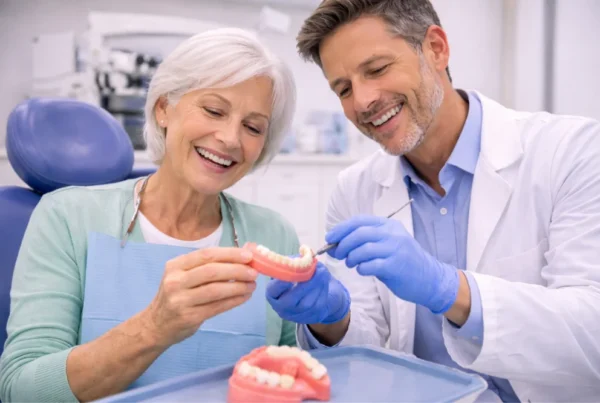

Eating with dentures is possible for most people, but it often feels different than eating with natural teeth at first. Many new denture wearers worry that they will never enjoy their favorite foods again. The reality is that most patients can return to a wide range of foods once they learn a few new habits and give their mouth time to adapt.
Dr. Jamielynn Hanam Jahr of Beverly Hills Aesthetic Dentistry has spent more than two decades helping patients restore both confidence and function after tooth loss. As a DDS and long standing member of the ADA, CDA, and AACD, she focuses on designing dentures that look natural and perform well in everyday life. Patients from Beverly Grove, West Hollywood, Bel Air, Beverly Crest, and the Golden Triangle often ask the same thing after receiving dentures: will I ever be able to eat normally again?
What Eating Normally Means With Dentures
Many patients assume dentures will function exactly like natural teeth, but the experience is slightly different. Dentures rest on the gums or attach to implants rather than anchoring directly into the jaw like natural teeth. Because of this, bite strength and stability may feel different at first.
The good news is that most people return to a broad and satisfying diet once they learn how to eat with dentures comfortably. The key is adjusting technique rather than eliminating favorite foods completely. Smaller bites, balanced chewing, and gradual food progression make a major difference in everyday comfort.
Implant supported dentures often provide even greater chewing confidence. Because they attach to implants in the jawbone, they tend to move less and allow stronger bite pressure. Many patients say this option feels closest to eating with natural teeth.
The Denture Eating Adjustment Timeline
When patients ask how long it takes to eat normally again, the answer usually depends on the adjustment period. The mouth needs time to learn how to control the denture and distribute pressure evenly. Most patients move through a few recognizable stages as they adapt.
| Adjustment Stage | What Patients Experience | Eating Strategy |
| First 1 to 2 weeks | Soreness, awkward chewing, extra saliva | Soft foods and small bites |
| Weeks 3 to 8 | Better control and fewer sore spots | Gradually add more textures |
| Months 2 to 3 | Dentures feel more natural | Return to a broader diet |
Seeing the process this way helps patients realize early discomfort is temporary. Improvements usually happen week by week as the mouth adapts and dentists refine the fit. Follow up adjustments also help ensure dentures remain comfortable as chewing improves.
Tips That Make Eating With Dentures Easier
Learning to eat with dentures is similar to learning any new skill. Small adjustments in technique help the mouth adapt faster and prevent frustration. Many patients find that a few simple habits dramatically improve their eating experience.
Helpful habits that improve denture eating include:
- Cut food into smaller bite sized pieces
- Chew slowly using both sides of the mouth
- Choose moist foods with sauces or gravies early on
- Practice eating new foods at home before social events
These strategies help stabilize dentures while chewing and reduce the risk of sore spots. Over time the mouth becomes more coordinated and the process feels far more natural. Most patients are surprised how quickly confidence improves once they develop a routine.
Traditional Dentures Versus Implant Supported Dentures
Not all dentures perform the same way when it comes to chewing. Traditional dentures rely on suction, muscle control, and precise fit to stay in place. With practice they allow patients to enjoy many foods, although very hard or sticky items can still be challenging.
Implant supported dentures improve stability because implants anchor the denture directly to the jawbone. This reduces movement and allows greater bite strength when chewing. Many patients feel far more confident eating in public once their dentures are supported by implants.
For people who frequently attend social events or dine out often, the stability of implant supported dentures can be a major advantage. They tend to feel more secure and predictable during meals. That added confidence often expands the range of foods patients feel comfortable eating.
When Eating Problems Should Be Checked
Occasional difficulty while learning to eat with dentures is normal. However ongoing discomfort or instability should not be ignored. Dentures often require adjustments as the mouth adapts and small refinements can make a big difference.
You should contact your dentist if you notice problems such as:
- Persistent sore spots that last several days
- Dentures slipping while chewing soft foods
- Difficulty eating even after several weeks
- Food repeatedly collecting under the denture
These situations usually mean the denture needs a small adjustment rather than a complete remake. Dentists expect to make these refinements during the early adaptation phase. Addressing issues quickly often restores comfort and confidence.
Enjoying Food With Confidence Again
Most denture wearers return to a satisfying diet once they understand how the adjustment process works. Early weeks require patience and softer foods, but improvement happens steadily with practice and proper fit. For many patients the biggest change is learning new chewing techniques rather than giving up favorite meals.
At Beverly Hills Aesthetic Dentistry, Dr. Jamielynn Hanam Jahr helps patients move through that transition with clear guidance and careful adjustments. Whether someone has traditional dentures or implant supported restorations, the goal is always the same: restoring comfort, confidence, and the ability to enjoy meals again. A consultation allows patients to discuss their eating concerns, review denture stability, and create a personalized plan for eating comfortably.
Frequently Asked Questions
Can you eat normally with dentures?
Patients usually ask this because they worry their diet will be permanently limited. The better question is how eating typically improves as the mouth adapts to dentures. Most patients return to a broad range of foods within a few months because muscles learn to stabilize the denture and dentists refine the fit through small adjustments.
What foods are hardest to eat with dentures?
This question matters because early frustration often comes from choosing foods that are difficult during the adjustment phase. A more useful question is how those foods can be prepared so they are easier to manage. Hard, sticky, or very chewy foods can be challenging at first, but cutting food into smaller pieces, choosing softer cooking methods, and chewing evenly on both sides usually makes meals much easier.
Are implant supported dentures easier to eat with?
Patients often ask this when they feel their dentures move while chewing. The better question is whether greater stability would improve their daily eating experience. Implant supported dentures attach to implants in the jawbone, which greatly reduces movement and usually allows stronger bite pressure than traditional dentures.
Will eating always feel different with dentures?
Many patients worry that dentures will never feel comfortable. A more helpful question is how long it takes for eating to feel natural again. With practice, proper denture fit, and occasional adjustments, most people regain confidence eating and find that meals become comfortable again over time.