From your first consultation to the day your final crown is placed, the dental implant procedure happens in a series of predictable steps. It is not one long appointment, and it is not a mystery when explained properly. This guide walks you through the dental implant procedure step by step, so you know what happens, when it happens, and what to expect at each phase.
At Beverly Hills Aesthetic Dentistry, Dr. Jamielynn Hanam-Jahr plans implant treatment as a guided process, not a rushed procedure. With more than two decades of experience in cosmetic and restorative dentistry, she helps patients understand timelines, comfort, and options before anything begins. Patients from the Golden Triangle, Beverly Grove, West Hollywood, South of Wilshire, and Bel Air often say that knowing the steps ahead of time is what finally made them feel at ease.
Consultation and Implant Candidacy Evaluation
Every successful implant case starts with a careful evaluation. This visit determines whether dental implants are appropriate now, later, or after preparatory care.
During the consultation, your dentist reviews your medical and dental history, examines your mouth, and takes digital X-rays. In many cases, a 3D CBCT scan is used to measure bone volume and locate nerves and sinuses. This information helps prevent surprises later.
This visit is also about goals. Your dentist discusses whether you are replacing a single tooth, multiple teeth, or considering a full-arch solution. Esthetic expectations, timeline preferences, and budget considerations are all part of the conversation.
Treatment Planning and Any Needed Preparatory Care
Before surgery, your implant plan is finalized in detail. This step explains why some patients need additional procedures and others do not.
Digital planning software is often used to choose the ideal implant position, size, and angle. In some cases, surgical guides are created to improve accuracy. If damaged teeth remain, extractions may be scheduled separately or combined with implant placement when conditions allow.
Bone grafting or sinus lifts are recommended when bone volume is insufficient. These procedures create a stable foundation but add healing time, often several months, before implant placement. Skipping this step can compromise long-term success.
Dental Implant Placement Surgery
This is the step many patients worry about most, yet it is often easier than expected. Implant surgery is typically shorter and more comfortable than tooth extraction.
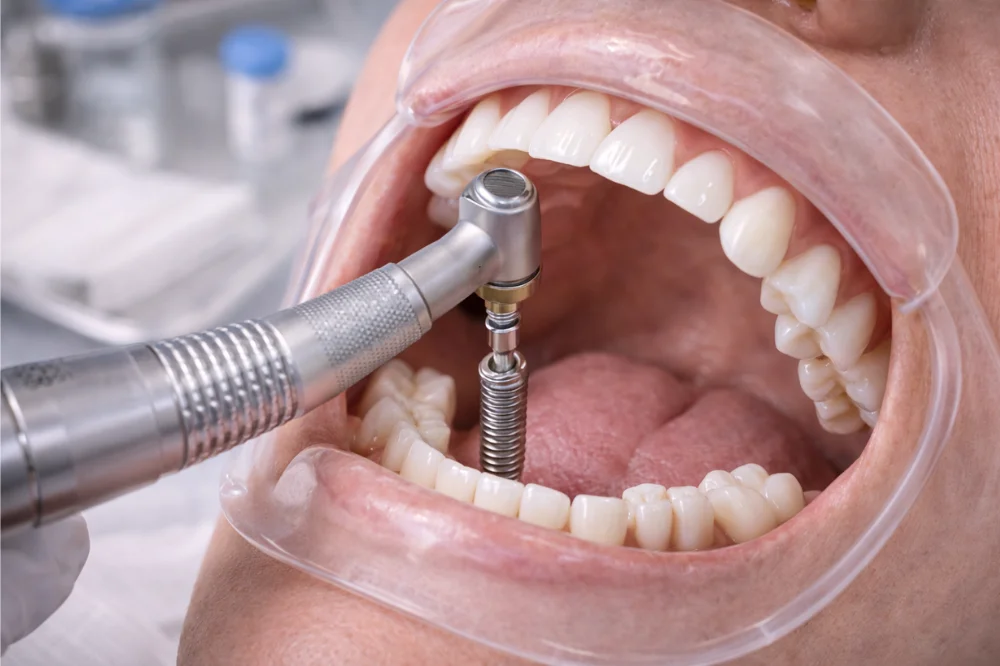
Local anesthesia is always used, and sedation options are available for anxious patients. For a single implant, surgery often takes one to two hours. The dentist prepares the bone, places the implant post, and closes the area with sutures or a healing cap.
In selected cases, temporary teeth may be placed the same day. These are carefully designed so they do not overload the healing implant.
Healing and Osseointegration
This healing phase is when the implant becomes part of your jaw through a process called osseointegration. During this time, the bone slowly bonds to the implant surface, creating a stable foundation for the final tooth. It is also the longest phase of the process, but most of the healing happens quietly in the background while patients continue their normal routines.
Osseointegration is the process where bone fuses to the implant surface. This usually takes three to six months, and sometimes longer if grafting was performed. During this time, patients typically function with temporary teeth or modified restorations.
Follow-up visits allow your dentist to monitor healing and adjust temporaries if needed. Most patients return to normal routines within days of surgery, even though internal healing continues quietly.
Abutment Placement and Impressions
Once healing is complete, the next phase connects the implant to your new tooth. If the implant was covered during healing, a small procedure exposes it and places a healing abutment. This visit is usually quick and performed with local anesthesia only. Digital scans or impressions are then taken to design the final restoration.
This phase often takes a few weeks, depending on lab timelines and how customized your restoration needs to be. During this time, detailed digital scans and craftsmanship happen behind the scenes to ensure proper fit and appearance. Many patients wear improved temporary teeth while the final crown or bridge is crafted, so function and appearance are maintained throughout the process.
Final Crown, Bridge, or Full-Arch Restoration
This is the moment most patients have been waiting for. The implant finally looks, feels, and functions like a natural tooth, restoring confidence when you smile and comfort when you chew. For many people, this is when the entire process feels complete rather than in progress.
Before securing the final restoration, the dentist carefully checks fit, bite, and appearance, making small adjustments for balance and comfort. The crown, bridge, or full-arch restoration is then placed, either with a screw-retained or cemented approach based on the plan. Patients leave with clear care instructions and a maintenance schedule, since implants are strong but still need regular cleanings, monitoring, and protection from grinding.
Standard vs Immediate vs Full-Arch Timelines
Before reviewing the table below, it helps to understand that not every implant follows the same path. The right timeline depends on bone quality, health, and treatment goals.
| Treatment Path | Typical Timeline | Key Differences |
| Standard implant | 3–6+ months | Staged healing with highest predictability |
| Immediate single-tooth | Same day to weeks | Implant placed at extraction with temporary tooth |
| Full-arch immediate load | Days to weeks | Fixed teeth placed quickly on multiple implants |
This comparison shows why marketing terms like “same-day implants” require context. Immediate options are powerful tools, but they are not right for every patient.
Alternate Implant Paths and Case Variations
Not every implant journey follows the same script, and that is completely normal. Some patients qualify for immediate implants, while others benefit from staged care that prioritizes safety and long-term stability. The right approach depends on how your mouth is starting, not on a one-size promise.
Immediate implants place the implant at the time of extraction, and immediate load full-arch treatment uses multiple implants to support fixed teeth quickly. These options depend on bone density, bite forces, and overall health. A qualified implant provider explains why an approach is recommended or ruled out, keeping the focus on durability and predictability rather than speed alone.
Taking One Confident Step at a Time
Choosing dental implants often feels overwhelming because the process is unfamiliar, not because it is unmanageable. When you understand each step, what it’s for, and how it protects your comfort, appearance, and long-term health, the uncertainty fades. Instead of feeling like a leap of faith, the journey becomes a clear path forward with predictable milestones and steady progress.
At Beverly Hills Aesthetic Dentistry, Dr. Jamielynn Hanam-Jahr serves as a guide through that process, helping you understand your options, timeline, and temporary solutions before anything begins. If you are considering dental implants, a consultation gives you the chance to see your personalized plan, ask informed questions, and move forward with confidence rather than hesitation.
Frequently Asked Questions
How long does the dental implant process take?
Patients ask this because they want to plan work and personal time. A better question is how their specific case affects healing. Most implant cases take three to six months, longer if grafting is needed. Your timeline depends on bone health and treatment type.
Is dental implant surgery painful?
This matters because fear delays care. What patients should ask is how pain is managed. Local anesthesia and sedation keep surgery comfortable, and most patients report mild soreness afterward. Pain is usually less than expected.
Will I have teeth while my implant heals?
Patients worry about appearance during healing. The better question is what temporary options are available. Most patients have temporary teeth or modified restorations during healing, especially in visible areas.
Are same-day dental implants right for everyone?
This question reflects interest in convenience. What patients should ask is whether they are a candidate. Immediate implants depend on bone quality, bite forces, and health. A careful evaluation determines if this option is appropriate.