Dental implants can last for decades, but only when they are treated like the long-term investment they are. Unlike natural teeth, implants cannot get cavities, but the gums and bone around them can still become infected or damaged without proper care. This guide explains dental implant maintenance in a clear, practical way, so you know exactly how to protect your implants every day and over the long term.
At Beverly Hills Aesthetic Dentistry, Dr. Jamielynn Hanam-Jahr helps patients understand that implant success does not end after surgery. What happens at home, combined with regular professional care, determines whether implants stay comfortable and stable for years. Patients from Beverly Grove, West Hollywood, Bel Air, Beverly Crest, and the Golden Triangle often ask how to prevent peri-implantitis and avoid costly complications.
Daily Home Care Essentials for Dental Implants
What you do each day matters more than any single appointment. Consistent plaque control protects the gum tissue and bone that support implants, reducing inflammation and long-term risk.
A reliable daily routine should include the following implant-specific habits:
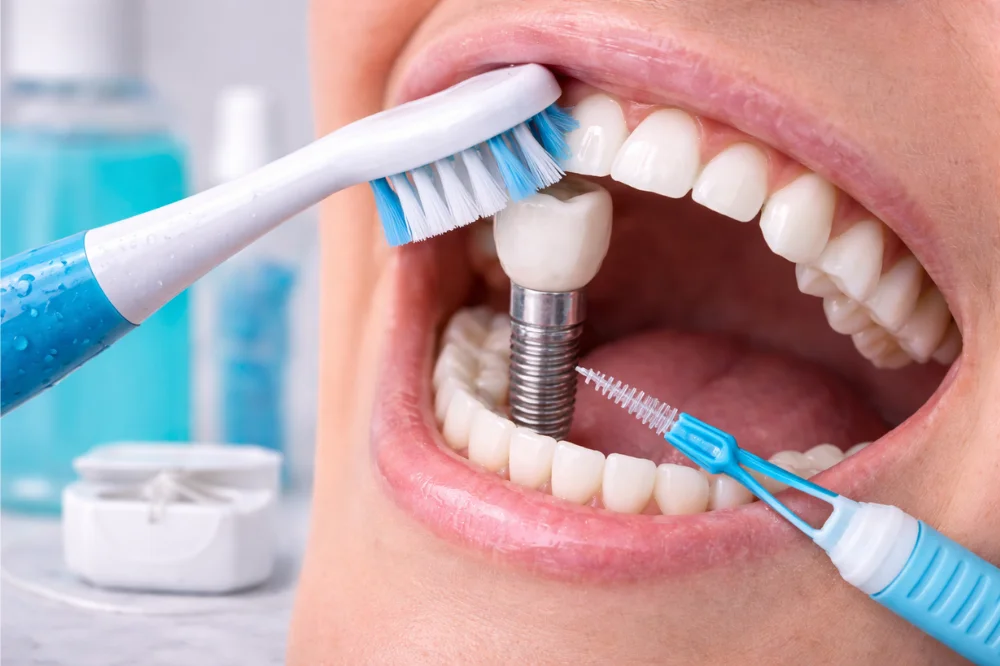
- Gentle brushing twice daily: Use a soft-bristled manual or electric toothbrush and angle the bristles toward the gumline around implant crowns. Aggressive scrubbing can irritate tissue and damage restorations.
- Low-abrasive toothpaste: Choose a fluoride toothpaste without heavy whitening agents, since abrasive formulas can scratch implant crowns and make plaque cling more easily.
- Interdental cleaning: Use implant-safe floss, interdental brushes, or a water flosser every day to clean areas a toothbrush cannot reach.
When these steps are done in the same order each morning and evening, implant care becomes automatic instead of stressful. This consistency keeps gums calm, makes early changes easier to notice, and supports long-term stability.
Professional Maintenance and Implant Checkups
Implants need professional care even when they feel perfect. Early implant problems rarely cause pain, which is why regular checkups are one of the strongest protections against peri-implantitis.
Most patients should be seen at least every six months, and sometimes more often if they have risk factors like gum disease or diabetes. During these visits, the dental team evaluates gum health, bone levels, bite balance, and plaque buildup around implants. Implant-safe instruments and polishing techniques are used to clean thoroughly without scratching surfaces.
These appointments are also a chance to fine-tune home-care routines and adjust tools. Small corrections made early prevent minor issues from quietly becoming serious problems.
Habits and Lifestyle Choices That Protect Implants
Everyday habits either protect implants or slowly undermine them, often without immediate warning signs. Repeated stress, inflammation, or reduced circulation around the gums can weaken the tissue and bone that hold implants in place. Over time, these small pressures determine whether implants remain stable or begin to develop avoidable problems.
Lifestyle choices that strongly influence implant health include:
- Avoiding hard or damaging habits: Chewing ice, hard candy, pens, or fingernails places excessive force on implant restorations and increases fracture risk.
- Managing grinding or clenching: Night guards protect implants and natural teeth from constant overload during sleep or stress.
- Eliminating smoking: Smoking increases inflammation and reduces blood flow to the gums, significantly raising the risk of peri-implantitis.
- Supporting overall health: Balanced nutrition and good control of conditions like diabetes improve healing and long-term implant stability.
Small, consistent changes in daily habits often make the difference between long-term comfort and gradual breakdown. Patients who protect their implants from unnecessary stress and inflammation tend to experience fewer complications over time. These choices work quietly in the background to preserve both function and bone support.
Cleaning Needs Based on Implant Restoration Type
Not all implant restorations are cleaned the same way, because different designs create different plaque traps and pressure points. Cleaning techniques that work for a single implant may miss critical areas under bridges or full-arch restorations. Matching the right tools to the restoration design is essential for protecting the gums and bone that support the implant.
| Implant Restoration Type | Key Cleaning Focus | Recommended Tools |
| Single implant crown | Gumline and contact areas | Soft brush, implant-safe floss |
| Implant bridge | Underside of the bridge | Floss threaders, super floss, water flosser |
| Fixed full-arch restoration | Gumline and underside | Water flosser, small interdental brushes |
| Removable implant denture | Prosthesis and attachments | Daily removal, brush, soak as directed |
Understanding how your specific restoration is designed helps you focus effort where it actually protects the implant. Cleaning only what you can see often leaves harmful buildup in hidden areas that cause inflammation over time. Your dental team can demonstrate the correct angles and tools for your case so daily care stays effective and manageable.
Early Warning Signs of Peri-Implant Problems
Implants rarely fail suddenly, which is why early warning signs matter so much. Problems often start quietly in the gums before pain or looseness ever appears. When these early signals are missed, inflammation can progress and compromise the bone that supports the implant.
Redness, swelling, bleeding during brushing or flossing, persistent tenderness, a bad taste, or changes in how your bite feels all deserve attention. These symptoms can indicate peri-implant mucositis or peri-implantitis, both of which involve inflammation around the implant. While mucositis is often reversible, peri-implantitis can lead to bone loss if it is not addressed promptly.
If symptoms last more than a few days or seem to worsen, contact your dentist instead of waiting them out. Early care usually involves simple, non-invasive steps that calm inflammation and protect surrounding tissue. Delaying treatment increases the chance of bone loss and raises the long-term risk to the implant.
How Maintenance Affects Implant Longevity
With proper care, dental implants can often last twenty years or longer, making them one of the most durable tooth replacement options available. Daily cleaning, regular professional maintenance, and healthy habits work together to protect the bone and gums that hold implants in place. When these supports stay healthy, implants remain comfortable, functional, and predictable over time.
Neglecting maintenance increases the risk of infection, inflammation, and gradual bone loss around the implant. These problems often develop slowly and may not cause pain until significant damage has occurred. Treating implant care as part of your overall health routine protects both your smile and the investment you made in it.
Protect the Investment You Made in Your Smile
Dental implants last when the care after treatment is taken seriously. Daily gentle cleaning, professional maintenance, healthy habits, and early response to warning signs keep the foundation around implants stable and predictable.
At Beverly Hills Aesthetic Dentistry, Dr. Jamielynn Hanam-Jahr helps patients protect their implants with personalized maintenance plans and ongoing guidance. If you have implants or are planning to receive them, schedule a maintenance visit or implant checkup to review your routine, adjust tools if needed, and make sure your investment stays healthy for years to come.
Beverly Hills Aesthetic Dentistry
435 N Bedford Dr #414, Beverly Hills, CA 90210
(310) 276-2088
https://mybeverlyhillsdentist.com
Frequently Asked Questions
How often should dental implants be professionally cleaned?
Most patients benefit from professional cleanings every six months, and sometimes more often if they have higher risk factors. Regular monitoring helps prevent peri-implantitis. Sources: https://www.ada.org 2024, https://www.mayoclinic.org 2023.
Can dental implants get infected?
Yes, the gums and bone around implants can become inflamed without proper care. Early treatment greatly reduces the risk of implant loss. Sources: https://www.cdc.gov 2023, https://www.health.harvard.edu 2023.
Are water flossers safe for dental implants?
Water flossers are commonly recommended for implants, bridges, and full-arch restorations when used gently. They help clean areas traditional floss cannot reach. Sources: https://www.ada.org 2024, https://www.health.harvard.edu 2023.
What are early signs that something is wrong with an implant?
Bleeding, swelling, tenderness, bad taste, or bite changes are early warning signs. Calling your dentist early often prevents serious problems. Sources: https://www.mayoclinic.org 2023, https://www.cdc.gov 2023.